6/10 Countdown (but you can get it now): Art for all our “sakes”

As I was thinking about this post, which is about art related to the loss of our son, the phrase “art for art’s sake” kept tapping at my brain. I do believe in the intrinsic value of art, but maybe not so much that it should be judged by its politics, which is (I think) what it meant when it came into being in the early 19th century. (Okay, I did google that, my art history being rusty.) But it wasn’t really that art movement that got my attention, but rather the word “sake,” which I assumed meant something like “side.” Here’s the easy-to-find definition:

Old English sacu ‘contention, crime’, of Germanic origin; related to Dutch zaak and German Sache, from a base meaning ‘affair, legal action, thing’. The phrase for the sake of may be from Old Norse.

Given yesterday’s post on the often bizarre experience of sitting in a courtroom (where all manner of “crime” gets its dime), I was struck by the serendipitous connection. I love the art that emerged out of the crime, that was created for Casey’s sake and for our sake… I have three artists I want to focus on, our friend Julie-Anna from Hopkinsville, our artist son Galen, and Casey’s dad Ken.
Julie-Anna’s Ginkgo Heart

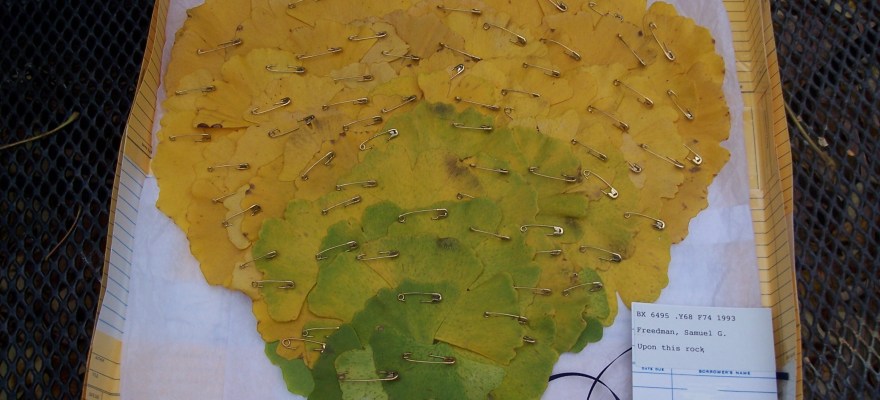
Julie-Anna, photographer, painter, sculptor, gave us this heart made of ginkgo leaves—which themselves resemble hearts. Julie-Anna has at least one large ginkgo tree in their yard, and we have one in ours. Every fall, the trees’ leaves all turn yellow at the same time and fall soon after in a blizzard of gold. The leaves are associated with memory, so the symbolism is perfect—furthermore, she safety-pinned the leaves together, suggesting that memory is fragile, sometimes hanging by a thread, and yet also bound together with other memories. The gift was bound by love, just as loss is.

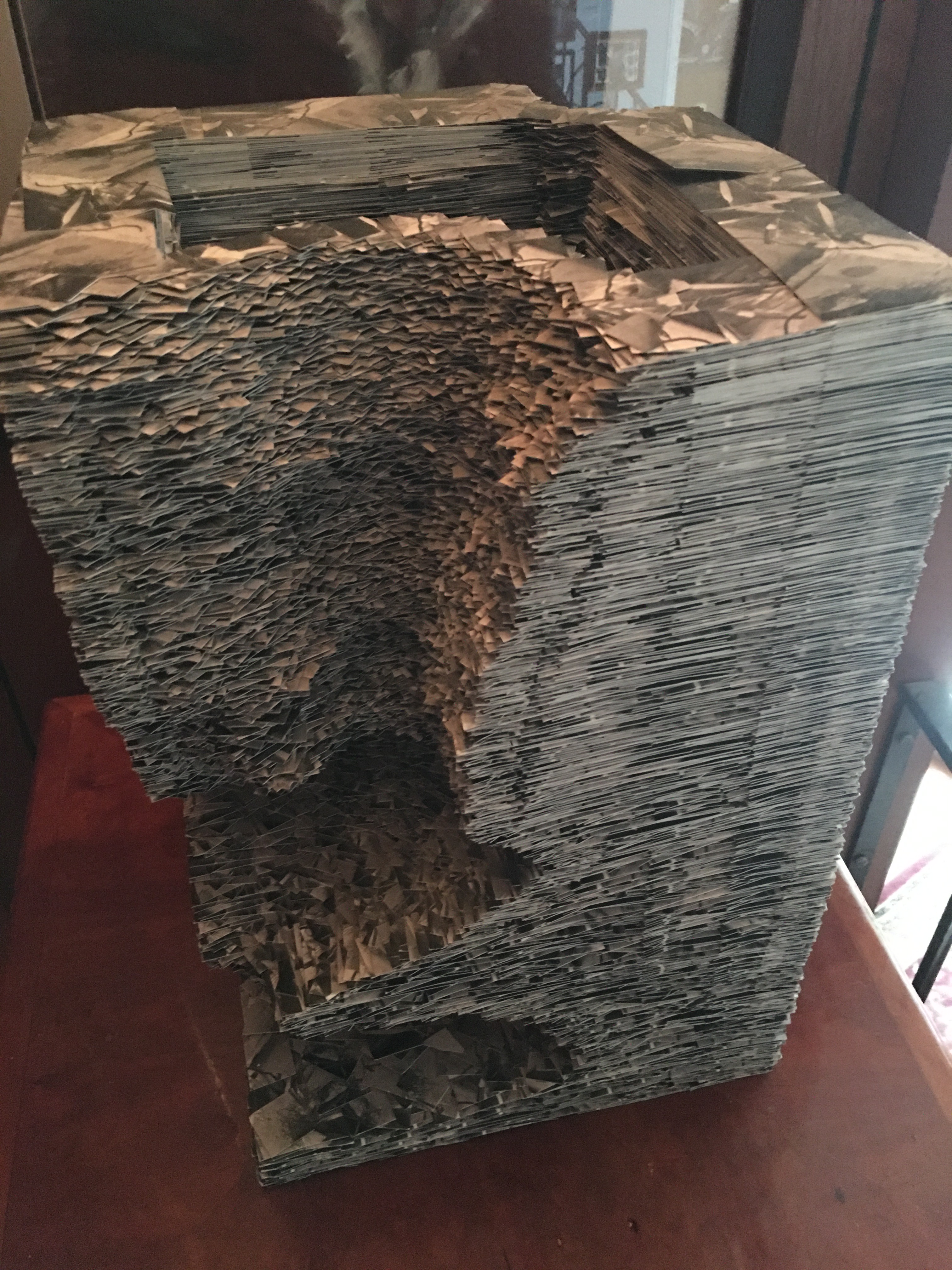
Memory is also the theme of three pieces that Galen created. The Black Hole of Memory was about 6’x4’x4′ and covered with images of Casey and his two brothers and us parents. The second is his sketch of Casey, from a photo taken for his senior prom. The third is a tower, again of pieces of photos repeated over and over. The tower is hollowed out inside and cut out on the edges to reflect the carved up nature of memory.

There are other examples of art—his father Ken’s watercolors, the poems the two of us wrote, sometimes together with writing prompts we made up—and the song Ken wrote. I love how all these expressions dwell on memory, the way we keep alive the people we love.

Here’s a link to Ken’s wonderful song, “Up on My Shoulders.”

7/10 Countdown to Digital Release (hard copy already available): Court

One thread weaving through The Tree You Come Home To is the trial proceedings. I don’t want to talk much about that here, but I will offer a couple of observations about the court room, including one that still makes me laugh. But first . . . I just said I wasn’t going to talk about the trial proceedings, and I won’t much, just this one incident involving people sitting behind us.

The defense attorney, the toad-like Brad Coffman, was laying into all the things that Casey had done wrong, implying that he was responsible for his own death. Some African American women began muttering (loudly), “So?” and “What difference does that make?” I don’t know who they were or why they were there, but I am so grateful to them!

That’s the sort of unexpected thing that can happen when you’re suddenly thrown into close proximity with people you don’t know, who may not be much like you, but who are sharing a space with you for long enough to make you companions, of a sort.

The second incident was just a comment my son Galen made. We were sitting on the court pews—the place was packed—and other cases were preceding ours. I wanted to listen (human interest, nothing prurient!), especially since a grandmotherly woman was responding to questions about her embezzling of $10,000. But the lawyers sitting at and leaning over the lawyer tables were talking too loudly to hear. Every once in awhile they’d pause to listen to something even they found interesting, but mostly it was as if they were killing time while awaiting their boarding call. It was clear they are important to all that was going on.

Galen leaned over and muttered, “They all look like douche bags.” It just cracked me up. Still does.

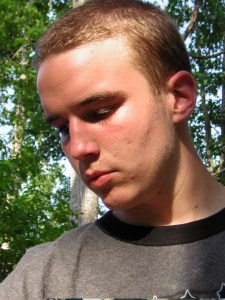
[As to a photo to illustrate this post, I looked for one of the statue of Lady Justice that’s inside our Justice Center, as well as photos of the Center itself or of a court room, but didn’t want to violate copyright. A photo of Galen makes sense (he did design the cover, after all), and you can imagine him making that comment when you look at that smile.]

8/10 Countdown to 1/25 Release: Haiku

Within a month after Casey died, friends and I started posting haiku. It began with Kathryn writing these two haiku:


Do not walk in pain.
Stay positive in the light.
Embrace your true friends

Monday morning now.
Someone should make me coffee.
Guess that would be me.

Funny, that second one, classic Kathryn.

People started responding. It surprised me that people who’d never tried to write one joined in, along with seasoned poets and professors. Sometimes the haiku talked back and forth, and other times they stood independently; some offered commentary on the writing process or on our seeming obsession with putting everything into verse. There was a series on the joy of new sneakers.

Here’s the Haiku collection (below for another look)

I loved the way my Fb community came together, rather like people did in the first waves of covid. So I put together a little book of our poems, made copies, and sent them to everyone who participated.

During one of the many, many revisions of The Tree You Come Home To, I started inserting some of the ones I’d written as a way to pause between sections.

Although all my sisters-in-law took part, Susan especially dove into the back-and-forth. I wrote:

I’d ride to find you
(if love were a big strong horse)
and bring you back home.

And Susan replied:

There are no answers
at the bottom of grief’s well
but the ground is firm.

I wrote:

my hands grasp at air 
every day the tear widens— 
will I split apart? 

And Susan answered:

No, you will not split
even if we don’t know how
we’ll hold together.

So, this post is my homage to our communities that support us, to our friends who join us when we strike out in some new way, who sooth and empathize, who share that tremendous love without which we really would split apart. One more example of our haiku conversations:

9/10 Countdown to January 25 Release

Mental Health. Today, I was thinking about mental health as it pertains to Tree. Initially, I was thinking of talking about it as a continuum, one that stretches infinitely in each direction, from blissed out ecstasy to suicide or murderous obsession. But there is no end point in either direction, is there? Where would destruction of Planet Earth belong? The smell of a kitten or an infant’s first smile? Where does a memory fit as it shifts over time? How many points on the line as we revise our past?

The other problem with a continuum is that it suggests that once you’re “here” or “there” you can go only in one of two directions, up or down. But my experience with mental health and mental illness tells me that it’s not so linear, or not always so, and that something more like ocean waves suggest the heaving and ebbing, returning and receding of mental health and illness.

Our mental wellbeing is something that we must nurture and cultivate even when we are stable and “happy.” And when we’ve been slapped down, we long for its return, often seeking it in ineffective, even damaging ways. I will have more to say tomorrow, maybe, when I talk a little about addiction.

At any rate, recovery from mental illness (situational or lifelong) is important enough to The Tree You Come Home To that my editor and publisher Jodie Toohey (more on her soon) asked if I’d be willing to donate 10% of the proceeds to NAMI, National Alliance on Mental Illness, and of course I said yes.

Casey at 15 or 16

10/10 Countdown to January 25

Counting down with a daily nugget regarding my memoir, The Tree You Come Home To, available in just 10 days! 

It’s two stories intertwined, that of my son Casey who was shot and killed in 2009 at the age of 20 and my own as I sought ways to find a way forward in this beautiful, difficult world. I began writing poems about Casey soon after he died, which make up a good part of Seeking the Other Side (Fleur de Lis Press). Writing about my internal life during the four years or so that followed became my part of this memoir. Casey’s story, from birth to death, came about when I realized mine was only half of our shared story.

In Appreciation Pages

After reading a good book I like to find and read the appreciation page. It has to be in that order: finish a good book, even better, a terrific book, then see who helped the author achieve that wonderful thing: writing a very good book, a fine book, one that stays with me for weeks.

It’s no easy thing, I’ve learned, to thank all the right people, not to forget your husband, for instance, or another pretty important person whose role may have been so significant that you forget to mention them. It doesn’t go without saying.

I recently sent my publisher my appreciation page for my upcoming memoir then three months later remembered someone I don’t want to leave out, so will be writing them into the galleys. How many more, I don’t like to think about.

The authors of the five most recent novels (and one memoir) I’ve read suggest what I’m talking about. They reveal a range of expressions—some I like better than others, but it’s only a matter of degree. They’re for someone else, after all.

James McBride ends his terrific Deacon King Kong with this one sentence: “Thanks to the humble Redeemer who gives us the rain, the snow, and all things in between.”

Charlotte McConaghy ends her Migrations with two pages, beginning with her editor, publicist, her UK editor, her “team of amazing friends,” and her family, and ends rather surprisingly close to McBride, with the “wild creatures of this earth” and “regret for those that have been wiped out and for love of those that remain.”

Laura Coleman’s pretty wonderful memoir, The Puma Years, closes with a more intimate two pages that begins with thanks to her parents and her “first readers,” her mother, her sister, her friends. She thanks the workers of Ambue Ari in Bolivia, the rescue center where she volunteered for years and where she met Wayra, the puma she developed such a powerful relationship with. She mentions all the animals by name, she thanks her editor, and says, “lastly, but never last, to the jungle.” The last paragraph is a reminder that wild animals are not pets and ways you can help.

Very different is Ayad Akhtar, author of Homeland Elegies, whose Acknowledgements place is a list of names only, a long sentence that ends with “and the American Academy in Rome—and always and for everything, Annika Boras.”

Douglas Stuart, author of Shuggie Bain, about a boy’s difficult struggle to save his mother from alcohol, closes with a short page, which begins, “Above all, I owe everything to the memories of my mother and her struggle, and to my brother who gave me everything he could. I am indebted to my sister for encouraging me to set this into words and share it with you.” That, after you’ve read the poignant, sad, brave story of Shuggie, will just grip you. It did me. His last sentence is a thank you to his partner: “The last words of this book belong to Michael Cary, he read it first, and nurtured the heart of it, like he always does.”

A good book will make you feel good, and a good acknowledgement will remind you that you do.

(*The picture that goes with this post shows two of the people at the top of my appreciation list, with me. It was a fun day, Alex’s 13th birthday. I like our silliness, too.)

From .DOC to Proofs

The process of moving from manuscript to hand-held memoir is emerging as a series of little decisions. In the case of The Tree You Come Home To, the trickiest editorial decision has to do with how to mark the many instances where other people are quoted. Because so much of Casey’s story was lost to memory, I had to piece it together with a range of documents:

–Casey’s journal and other writing
–case notes from social workers and psychiatrists
–letters and emails Ken and I wrote to each other or to him or to Adrian (our middle son)
–interviews with friends and family, especially those closest to him

My smart publisher, Jodie Toohey, finally decided to differentiate between other people’s words and mine through indentations (rather than, for instance a font change). But sometimes the text moves in and out of quoting and reflecting several times on a page, so it’s easy to miss transitions. I like the way it looks now.

Another, rather amusing mistake we had to correct was when the ellipses (apparently I’m quite fond of them) started reproducing themselves. Here’s an example:

Ellipses Gone Wild

I had combed through the original manuscript so many times that most of the typos and unnecessary passages were cleaned up, but Jodie Toohey, who runs Legacy Book Press, found a lot more–inconsistent use of numbers and commas, for instance, rather humbling for an English professor.

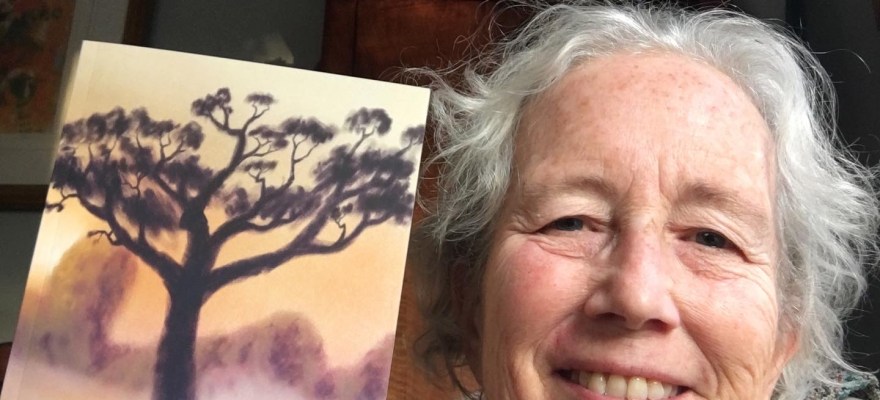
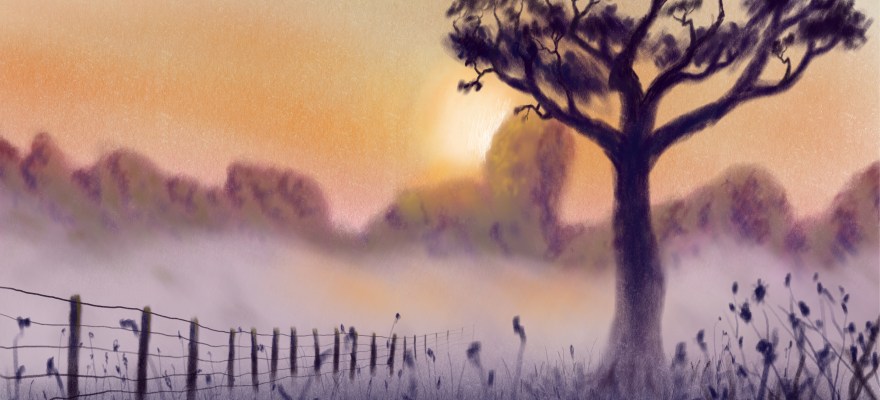
Another decision—much more visible than these wayward ellipses—has been the cover. My son Galen designed it, but the placement of title, name, summary, and comments took several iterations. Fortunately, the cover designer Kaitlea Toohey, was willing to play with color and font and we came up with a really nice cover. First, a font we didn’t use, with the title up in the branches and my name down in the , then one we did:

Early On Option
The One We Settled On

I like the font and the cream color works well with the sunset yellow of the image. More on the cover another time.

Things We Love and Lose, Things We Love and Keep

For the Unitarian Universalist Church here in Bowling Green, for Women’s History Month, I recorded this poetry reading (my own and others’). Although I don’t attend the church, I admire its principles and have friends who attend, so I was happy to work up a poetry reading–I knew I didn’t want to offer a lecture or discuss something of historical interest (leaving that to others more capable). Since my poetry is often about loss, I thought that would be a good topic, but not in a depressing or defeated way. I didn’t want this to be just about me, and it was fun finding poets who talk about things they love, but not in the usual sense. I was looking for poems that would enrich my theme, “things we love and lose and things we love and keep or struggle to keep.” The poems are about place and home, family and people we care about, and animals and our planet. It’s about 25 minutes. I hope you enjoy the poems (I include them so you can read along if you like). Here’s the link.

“Snowflakes in the Blizzard” One of 3 featured poets

I’m so pleased to have learned of Snowflakes in a Blizzard (Separating authors from the herd and giving them one-on-one time with readers), a blog hosted by Darrell Laurant, who contacted me a couple of months ago. I’m grateful for the kind surprises in life. Here’s the site. And here’s what Darrell says (excerpt):

I hope you enjoy it. And if you’d like to be included, contact me at writersbridge AT hotmail.com.

Best,

Darrell Laurant

Note: I am a 40-year veteran of journalism who retired two years to do freelancing full time. My first novel, “The Kudzu Kid,” was published last October, and lots of people are not buying it. A more recent book, “Inspiration Street,” is doing considerably better. Maybe I’m learning something.

When “the holidays” come

I had occasion the other day when someone said, “the holidays are usually the hardest,” to respond, “For most people, yes, but it doesn’t bother me.” I have reflected on my glibness and wondered if that’s why, ever since, he has placed himself so center, as if to say, “Really? You’re not troubled just a little?” Here we all are (most of us), preparing to gather with family and friends, to celebrate according to our traditions. It’s a time when we try to include everyone. Sometimes we run ourselves ragged, catching a few hours with this family member, fighting traffic and avoiding holiday accidents (drunk revelers), just so we can give a hug and laugh a little.

And that’s good. Laughter is. But then we notice a tinny quality in our own voice and that’s when the missing person’s absence pushes us against the wall, even years later. We’ve had no choice but to accommodate, but we’re not “over it” and the trite “closure” they keep talking about is more to satisfy a narrative than to describe reality. The wound doesn’t close, though we may go months with the seeping so subtle we don’t notice until all of the sudden the pool is full and flooding behind our eyes.

That is one way we fool ourselves, the glib wave of the hand–but it should be a warning, anytime our answer comes so fast and easy: get ready for big dose of humbling.

More reflective now, I am missing being able to see and touch two sons. In the next 10 days, I will love (and touch and laugh with) my oldest and our two granddaughters and my family. But I will honor the sadness that comes when we’re supposed to gather all the ones we love into our wide embrace and can’t. I will stop saying, it doesn’t bother me.

So this poem is for that. It’s a modified ghazal, “Ghazal by a Thread.” If you’re listening, given them a hug.