
The final chapter, bookend to the opening one, “Letters from the Karst,” is the mother Meredith’s story. I think everyone comes together here, whether from the past when the girls were young or in Meredith’s journals about loss or in the current day, when all three horses make their reappearance. And Meredith is a caver, her cave needed to be big. I could have picked Mammoth Cave, but I needed something unfamiliar for Meredith to explore. That’s why I picked Lechuguilla at Carlsbad Caverns.
Since I am reading Dachner Keltner’s Awe: The New Science of Everyday Wonder at the same time I’m re-thinking Letters from the Karst, it’s probably no surprise that Meredith’s trip to Lechuguilla came to mind. I first learned of Keltner’s book when listening to Krista Tippett’s On Being, where she interviews him about his latest book. (If you don’t know On Being, it is the best podcast out there!) Here’s a link to her interview with Keltner, “The Thrilling New Science of Awe.”
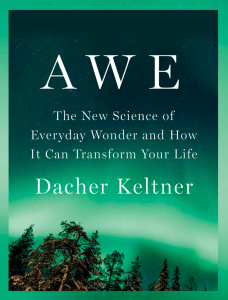
Keltner writes,
Vastness can be challenging, unsettling, destabilizing. In evoking awe, it reveals that our current knowledge is not up to the task of making sense of what we have encountered. And so, in awe, we go in search of new forms of understanding.
This is precisely what happens to Meredith on her caving expedition. Due to a minor rockslide she is left dangling for longer than is comfortable. Although experienced and perhaps due to her being on the cusp of a change in her life preoccupations, no longer writing about the loss of her husband David and instead reflecting on place, Meredith is ready for an epiphany.
This cave was a great ear, and I could feel it pressing itself against my skin. I was terrified of plummeting hundreds of feet with a thin rope and a hand brake all that kept me from a fall that could be as easily up as down, so suspended space had become.In perfect darkness I waited, suspended in the great throat of the cave. My line turned me slowly and now I heard it. A breath, a low sigh, a loneliness so deep that it had lost the awareness of self that loneliness usually heightens. I reached my hand out and the sigh rose. My lips opened, and the sigh shot up from the depths.
Later, she realizes:
I had gone to see a different cave formation than the ones I grew up with in Kentucky. I wanted to step outside of what had become home. I have been there three times now and co-written two papers trying to help untangle the mysteries that fascinate us. It happened in the midst of writing that second paper, the sudden certainty that I was telling only half the story—the surface of life beneath the surface—and so I began writing travel pieces for non-academic magazines, essays about life in all its extremities.
Although I didn’t realize it at the time, what I was describing for Meredith is the experience of awe, which according to Keltner, “is the feeling of being in the presence of something vast that transcends your current understanding of the world” (7). Maybe “epiphany” should be the subtitle for Letters from the Karst. The characters all wake up from some depth of slumber, so their epiphanies may be mild, more like a twitch, or signficant, marking a radical new path. Perhaps this is also what happens when we experience “wonder.”

Today’s post is quite a “quote-y” post, but I love the serendipity when what we’re reading, writing, or thinking about come together, and Keltner and Meredith belong together (with me).
You can order a copy of Letters from the Karst from your local bookstore or at Amazon, here.


 Jane Olmsted