Chapter 11: Extremophiles

The final chapter, bookend to the opening one, “Letters from the Karst,” is the mother Meredith’s story. I think everyone comes together here, whether from the past when the girls were young or in Meredith’s journals about loss or in the current day, when all three horses make their reappearance. And Meredith is a caver, her cave needed to be big. I could have picked Mammoth Cave, but I needed something unfamiliar for Meredith to explore. That’s why I picked Lechuguilla at Carlsbad Caverns.

Since I am reading Dachner Keltner’s Awe: The New Science of Everyday Wonder at the same time I’m re-thinking Letters from the Karst, it’s probably no surprise that Meredith’s trip to Lechuguilla came to mind. I first learned of Keltner’s book when listening to Krista Tippett’s On Being, where she interviews him about his latest book. (If you don’t know On Being, it is the best podcast out there!) Here’s a link to her interview with Keltner, “The Thrilling New Science of Awe.”
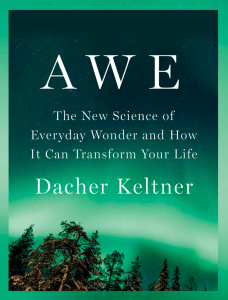
Keltner writes,

Vastness can be challenging, unsettling, destabilizing. In evoking awe, it reveals that our current knowledge is not up to the task of making sense of what we have encountered. And so, in awe, we go in search of new forms of understanding.

This is precisely what happens to Meredith on her caving expedition. Due to a minor rockslide she is left dangling for longer than is comfortable. Although experienced and perhaps due to her being on the cusp of a change in her life preoccupations, no longer writing about the loss of her husband David and instead reflecting on place, Meredith is ready for an epiphany.

This cave was a great ear, and I could feel it pressing itself against my skin. I was terrified of plummeting hundreds of feet with a thin rope and a hand brake all that kept me from a fall that could be as easily up as down, so suspended space had become.In perfect darkness I waited, suspended in the great throat of the cave. My line turned me slowly and now I heard it. A breath, a low sigh, a loneliness so deep that it had lost the awareness of self that loneliness usually heightens. I reached my hand out and the sigh rose. My lips opened, and the sigh shot up from the depths.

Later, she realizes:

I had gone to see a different cave formation than the ones I grew up with in Kentucky. I wanted to step outside of what had become home. I have been there three times now and co-written two papers trying to help untangle the mysteries that fascinate us. It happened in the midst of writing that second paper, the sudden certainty that I was telling only half the story—the surface of life beneath the surface—and so I began writing travel pieces for non-academic magazines, essays about life in all its extremities.

Although I didn’t realize it at the time, what I was describing for Meredith is the experience of awe, which according to Keltner, “is the feeling of being in the presence of something vast that transcends your current understanding of the world” (7). Maybe “epiphany” should be the subtitle for Letters from the Karst. The characters all wake up from some depth of slumber, so their epiphanies may be mild, more like a twitch, or signficant, marking a radical new path. Perhaps this is also what happens when we experience “wonder.”

Public domain

Today’s post is quite a “quote-y” post, but I love the serendipity when what we’re reading, writing, or thinking about come together, and Keltner and Meredith belong together (with me).

You can order a copy of Letters from the Karst from your local bookstore or at Amazon, here.

Chapter 10: On the Beautiful O-hi-o

Each chapter (or story) in Letters from the Karst features a different kind of cave or big hole in the ground. Like a karst system in which some caves are intimately connected and others less so, the characters may have close ties or be more removed, as is the case with Pat Likens in “On the Beautiful O-hi-o.” That phrase was rattling around in my mind at the time of writing this story, and since I grew up in Ohio, I like it that the setting, though in Kentucky, is partly on the banks of the Ohio—there I am marked and shaped by both Ohio and Kentucky.

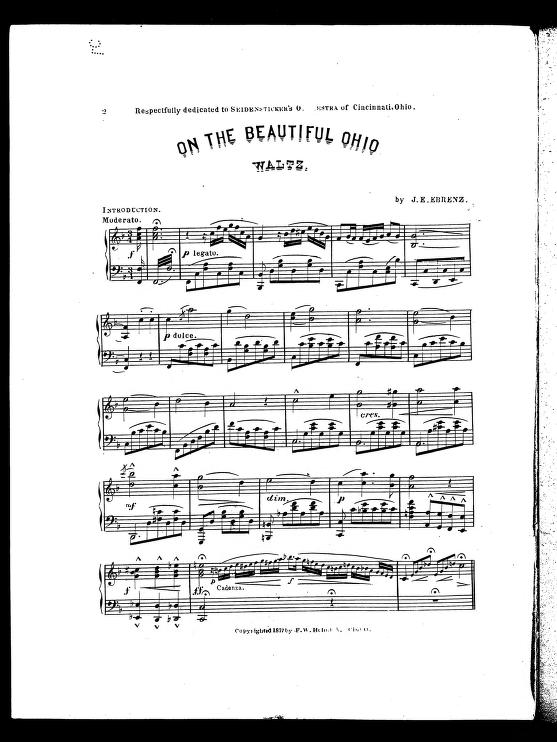
Here is an image of the sheet music for the waltz of the same name, in public domain. (My mom would approve of my including an image of written music.)

Pat is a colleague of Meredith at WKU, teaching in the English department. The first word is “Married,” and Pat is not happily so. The full sentence reads, “Married, Pat Likens lay in bed after her husband fell asleep, imagining his death.” It’s not an abusive relationship but Carl is possessive, and Pat is ready to move on. More than any other chapter, “Oh the Beautiful O-hi-o” weaves Pat’s dreams into the narrative that ends at a party of a colleague who has a big house on the Ohio River.

In an allusion to Virginia Woolf’s metaphor in A Room of One’s Own, the opening dream is of her fishing “where consciousness floated on top like an anchored dock at the edge of a country pond.” The dream intensifies:

Her shoulders strained and her feet slid in the muddy grass toward the pond. The pole bent dangerously, and suddenly the line angled beneath the bank, as though she were on a boat and the fish about to surface behind her. She even turned, and yes there were the trees, her car parked at the top of the small hill, the lawn chair with her book unopened in the grass beside it. She turned back and caught her first glimpse of something below the surface, and then her pole snapped. A moment later a man’s arm grabbed hold of a root just inches from her foot and began to pull a body tangled in fish line out of the water.

Pat’s dreams are violent, but there is no violence in waking time. All rage and disappointment have been sublimated and appear in dreams. The cave in this story appears in the final dream as a place that’s eerie and suggestive of danger. But everything happens outside the cave:

Ahead she saw the darkened entrance to the cave and behind her she felt the dogs’ breath on her heels. Time paused as she slid into a weird space and an ethereal sound arose from the depth of the cave before her; she stretched her arms toward it and with a snap, her dream picked up where it had left.

Dreams are important cave-like phenomena, emerging from the deep and bringing the darkness to the surface. But darkness is not necessarily bad, despite our fear of it; in fact, it’s essential to the processes that allow us to change our world.

You can order Letters from the Karst from your local library or from Amazon, here.

Chapter 8: Lost River

Bowling Green’s cave is a fascinating one, featuring a huge room large enough to hold several hundred people and an underground waterway that runs some 7 miles (only part of it accessible for tours). Once used as a dump site, in its more exciting days it was a night club and in an earlier century a Civil War camp. Its first inhabitants would have enjoyed it as a shelter and source of water. Maybe they camped there during the hot summer months.

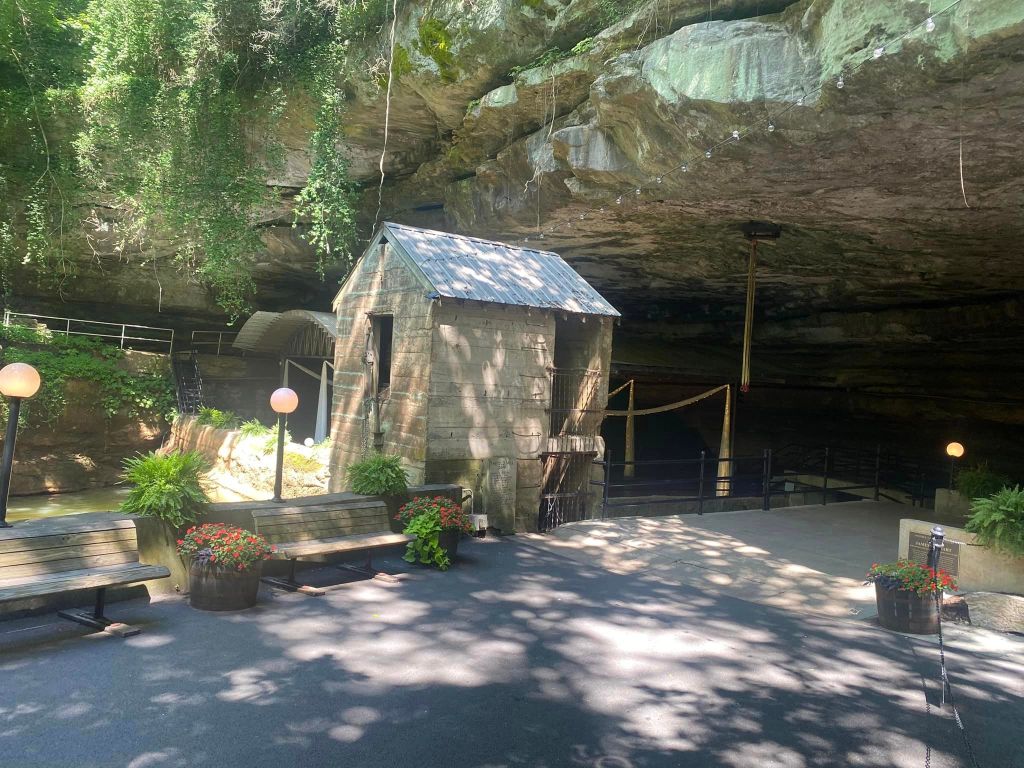
In “Lost River,” Derek, Cecily’s ex, is trying to put his life back together, though he still pines for Cecily. Its through his eyes that we learn of the explosion of a meth lab that likely scared them both straight. He is scarred, literally, from bits of glass hitting his face. Now, in current time, he has finished his education degree and teaches 3rd grade. On this day, he has taken his students on a field trip to Lost Cave. (The image, below is shared with permission of Maura Gerard, thanks so much!)

When they arrive, they pause on the path to the cave, which

led them past a blue hole, Ripley’s shortest river, running only 400 feet to the cave entrance. Once believed to be over 400 feet deep, the pool was actually only ten feet deep, linked with the underground river, where a current once deposited things miles away.

The guide’s voice got low and he looked around, as if he didn’t want anyone else to hear. “In a similar incident three soldiers went swimming, one didn’t come back, and his two friends, one by one, dove in to see what they could grab hold of. They were never seen again.”

Forty round eyes met his.

“Is that how come they call it the Lost River, ‘cause of people getting lost?”

The guide turned a page in his mental notes. “Late in the 18th century, some people found sawdust that was dumped into the water here in a pond about three miles away. That’s when they realized there had to be an underground river connecting the ponds all along.”

Lucy peered over the railing, into the greenish blue water.

“It don’t look anything special,” she said. “Looks like my grandma’s pond.”

“I don’t care what it looks like. You wouldn’t see me dive in after they didn’t come up!”

This was met with a chorus of “Me neither” and “That’s straight” and “I would . . . for a million dollars.”

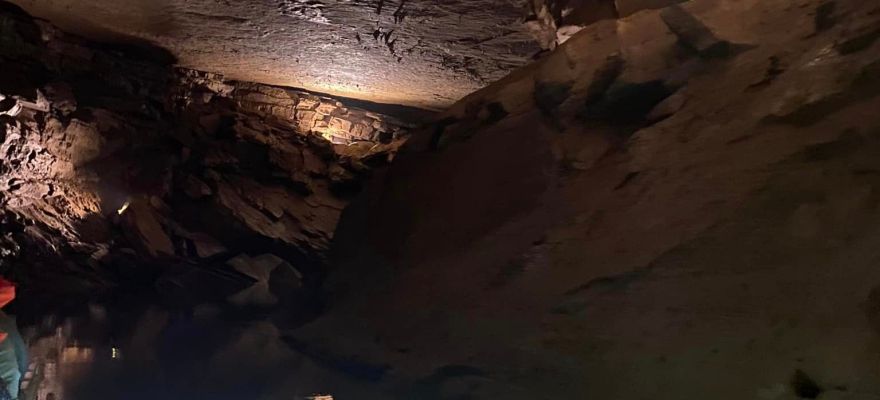
Inside the cave, once settled on their boat, Derek has a panic attack but manages to keep it together. Below you can see that the ceiling is well above your head; however, at other points, you have to duck.

                                                     Photo by Maura Gerard, with her permission

Derek is a kind man, tolerant and patient. The story takes place on a single day, a strange one, including a traffic accident involving Lucy, a trip to the hospital where he sits with Lucy’s mother, Mrs. Jackson, and where he sees and talks briefly with Cecily. It’s a story of coincidences, the kind you might describe as “stranger than fiction.” But that’s how life works, in my experience, and especially when we’re paying attention, not lost in our thoughts, rehashing mistakes, planning that lottery win, worrying over bills or why no one takes us seriously.

You can purchase Letters from the Karst at your local bookstore or on amazon, here.

Chapter 1: “Letters from the Karst”

This is the title story, told by the middle daughter, Cecily, along with a series of letter. This first chapter and the last one, “Extremophiles,” narrated by her mother, provide the bookends for the Collins family story. I won’t divulge anything that belongs to Cecily, so this will touch on other things.

Cecily has suffered from pretty severe substance abuse; the probable cause is divulged in her story. I have some experience with the intractability of addictive behavior, its seductions and high costs. My youngest son struggled throughout his teen years, spending most of his days in various institutions—special schools, incarcerations, treatment centers. Even when he was at home, he was on yard restriction and we went to weekly treatment and therapy sessions. When he was killed at age twenty, the autopsy declared his toxicology negative. His painful journey ended as he was making a turn-around, perhaps the one that would have set him on a better path. I am sure that Casey was in my thoughts when I wrote from Cecily’s perspective or about her in another chapter, which belongs to a former boyfriend, Derek (but more on him later). I tell Casey’s story along with my own and my family’s journey to healing in The Tree You Come Home To, which you can read about, under “Memoir.” (Here is a picture of Casey with his counselor Mr. Wright after he completed his time at Care Academy, about two hours from home, with his symbolic monkey around his neck.)

Cecily is the second of three girls born to Meredith and David. Her older sister, Diana, like so many oldest children, feels that she must bear the responsibility for her siblings’ well being. Because the younger sister, Molly, was born on the same day as Cecily, Cecily has always thought of Molly as belonging to her. In Letters from the Karst, this tight-knit group of siblings come to the fore and then recede as the other characters take their turns.

I think I was drawn to writing about siblings because I was an only child—at least I was raised as an only child, my three brothers and sister being raised by our father and their stepmother two states away. As a child I made friends with girls from big families (not coincidentally). One in particular, Barbara Dodson, shared the same birthday, which made us instant best friends. Her large family lived a block away and I remember being there whenever I could. I loved eating dinner with them at the end of a day of play. It was always hotdogs or canned spaghetti and I thought their meals were divine. I remember her uncle peering into the bottom of the TV screen to try to see into the cleavage of some actress. Male humor was completely foreign to me, living as I did with my mom, just the two of us. So writing Diana, Cecily, and Molly into being seemed to bring someone I already knew to life.

To order Letters of the Karst, request it from your local library or order from amazon, here.