Chapter 1: “Letters from the Karst”

This is the title story, told by the middle daughter, Cecily, along with a series of letter. This first chapter and the last one, “Extremophiles,” narrated by her mother, provide the bookends for the Collins family story. I won’t divulge anything that belongs to Cecily, so this will touch on other things.

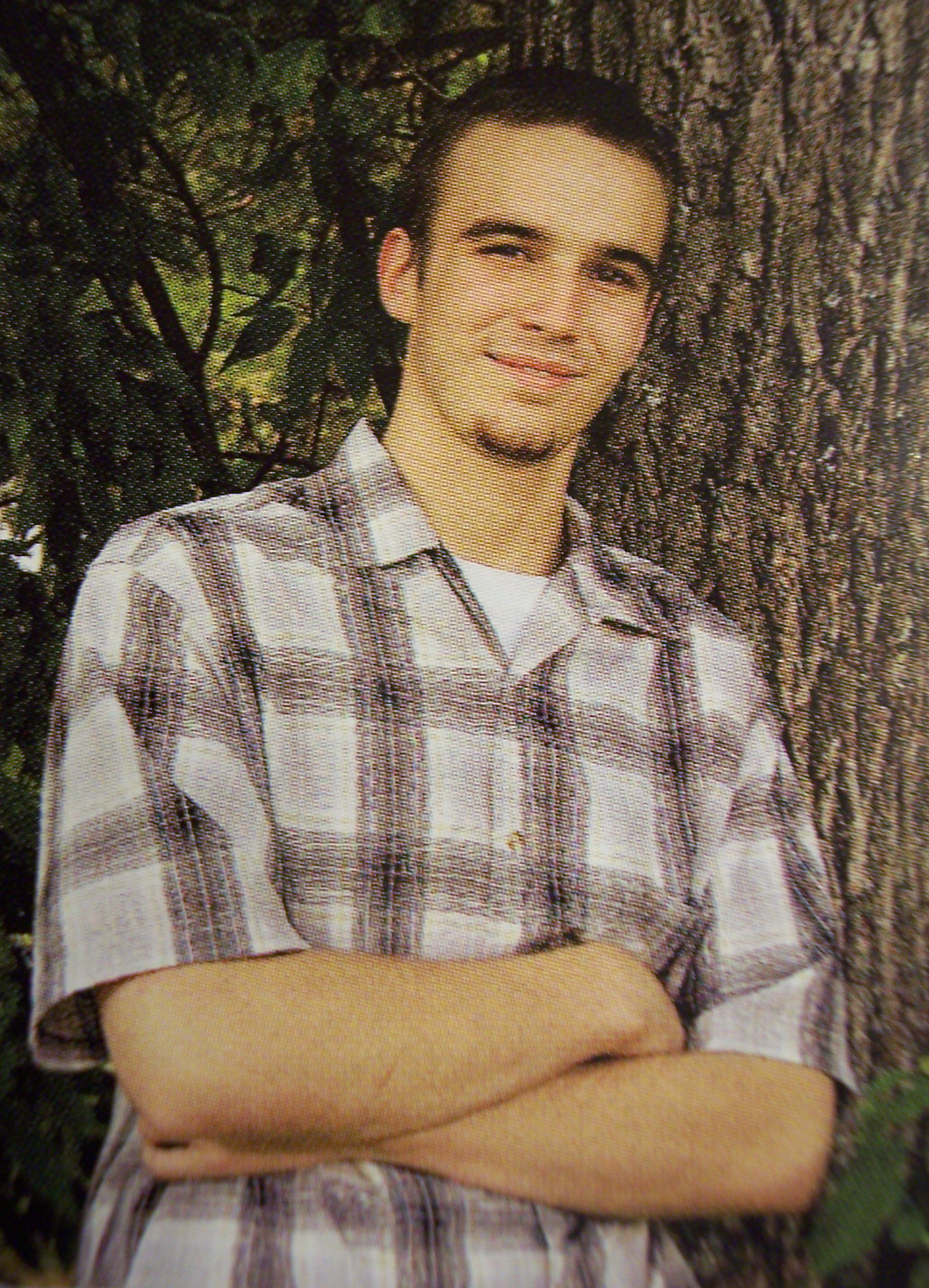
Cecily has suffered from pretty severe substance abuse; the probable cause is divulged in her story. I have some experience with the intractability of addictive behavior, its seductions and high costs. My youngest son struggled throughout his teen years, spending most of his days in various institutions—special schools, incarcerations, treatment centers. Even when he was at home, he was on yard restriction and we went to weekly treatment and therapy sessions. When he was killed at age twenty, the autopsy declared his toxicology negative. His painful journey ended as he was making a turn-around, perhaps the one that would have set him on a better path. I am sure that Casey was in my thoughts when I wrote from Cecily’s perspective or about her in another chapter, which belongs to a former boyfriend, Derek (but more on him later). I tell Casey’s story along with my own and my family’s journey to healing in The Tree You Come Home To, which you can read about, under “Memoir.” (Here is a picture of Casey with his counselor Mr. Wright after he completed his time at Care Academy, about two hours from home, with his symbolic monkey around his neck.)

Cecily is the second of three girls born to Meredith and David. Her older sister, Diana, like so many oldest children, feels that she must bear the responsibility for her siblings’ well being. Because the younger sister, Molly, was born on the same day as Cecily, Cecily has always thought of Molly as belonging to her. In Letters from the Karst, this tight-knit group of siblings come to the fore and then recede as the other characters take their turns.

I think I was drawn to writing about siblings because I was an only child—at least I was raised as an only child, my three brothers and sister being raised by our father and their stepmother two states away. As a child I made friends with girls from big families (not coincidentally). One in particular, Barbara Dodson, shared the same birthday, which made us instant best friends. Her large family lived a block away and I remember being there whenever I could. I loved eating dinner with them at the end of a day of play. It was always hotdogs or canned spaghetti and I thought their meals were divine. I remember her uncle peering into the bottom of the TV screen to try to see into the cleavage of some actress. Male humor was completely foreign to me, living as I did with my mom, just the two of us. So writing Diana, Cecily, and Molly into being seemed to bring someone I already knew to life.

To order Letters of the Karst, request it from your local library or order from amazon, here.

Publication Day/Birthday

Today is the first day that Letters from the Karst can be ordered from amazon or other booksellers. Here’s the amazon link. But as significant a day as that is in the life of any book, I want to talk here about its birthday.

As a Kentuckian (adopted, not by birth), I have long known that among the many beauties of my state, caves and horses may be our best features, along with bourbon, rolling hills, fickle weather, beautiful spring, bluegrass, and bar-b-que. Here, for instance, are two views of our back yard. While we don’t have any caves (that I know of), you can be sure they’re under there.

Beautiful greens, sometimes snow . . . I’m sure that back in 2001 when I got my first sabbatical, to work on a proposed collection of stories featuring caves, my love of Kentucky, the state we settled in, had been fully realized. I wanted the stories to be linked, like caves, both directly—through intimate passages that connect us to our family and friends—and indirectly—through what seems like happenstance, but may be a more subterranean process, like the erosion of what separates us.

I wanted there to be horses, not the prize-winning horses of the Derby or Keeneland, but homegrown horses, family members, the kind of animal that heals and brings us out of ourselves. So, the Collins family would be a horse family. The mother became the caver and professor of geography at the university here where we live: Western Kentucky University. Meredith is her name and the title of her chapter is “Extremophiles.” Her husband, David, is a poet and also a professor; he is bi-polar and his story is told during a manic episode. They, and their three daughters—Diana, Cecily, and Molly—each have their own chapter or story, though their story may be told by someone else, as is the case of Molly and Diana. The uncle (Meredith’s brother Ned) and her mother, Sarah, are important as well; her story goes back in time to the early 20th century when Floyd Collins was trapped in a cave just north of us. He is only a side note, however, and the “cave” featured in her story is a sinkhole. David’s cave is Plato’s Parable. And so on. . . . (Maybe more on individual stories later.)

So, Letters from the Karst was born of a big love for Kentucky—its land, its people, its animals—manifested in a family’s story of grief, betrayal, joy, and healing. Although it is fiction, there are many elements of my story here. In fact, that’s one thing my publisher wanted: if it’s fiction it needs to maintain a strong link to the author’s story.

To order Letters of the Karst, request it from your local library or order from amazon, here.

Kirkus Book Review

This just out, a review by Kirkus….they use the last sentence of their review as the tagline. I rather like this as well: “Olmsted outlines the various efforts made by her, doctors, therapists, and teachers to intervene in her troubled children’s lives, providing meticulous analysis of how to keep moving forward in the face of the seemingly insurmountable.” And the comment about my last chapter, on forgiveness, of course. Love that.

Here’s the review, click.

Book Review by Molly McCaffrey

This review, by Molly McCaffrey, appeared in the Bowling Green Daily News on Sunday, March 20.

“The Tree We Come Home To” by Jane Olmsted. Davenport, Iowa: Legacy Book Press, 2021. 261 pages, $12.99 (paperback).

Jane Olmsted’s new memoir, “The Tree We Come Home To,” tells the story of the murder of her youngest son, Casey Olmsted, at age 20. In breathtaking detail, Olmsted describes the events that led to Casey’s death, the circumstances of his murder and the torturous years that followed, including the investigation, trial and sentencing of his killer. In doing so, she asks the question: How does one go on after such a tragedy? The author’s longing is palpable: “I want to call out, now what? Where is the peace of mind? When can I see my boy and hold him?”

Olmsted succeeds at putting the reader directly inside her grief-stricken shoes. We feel her pain, her heartbreak, in a way that is all too real.

On Oct. 26, 2009, Casey Olmsted got into a heated argument with 18-year-old Patrick Burns over a young woman they both knew. Infuriated by their text messages, Casey drove to Burns’ home to confront him. When Patrick saw Casey pulling up in front of his house, he grabbed a pistol and headed for the door. But his father, Edmund Leland Burns, snatched the gun from his son and proceeded to shoot in the direction of the car four times, even though an unarmed Casey was already pulling away. Olmsted’s anguish over this scene is gut-wrenching: “I am sick with the thought of him driving away, knowing or not knowing what hit him, aware or not aware as the car rolled into the ditch. Alone, my poor boy, alone.”

“The Tree We Come Home To” is Olmsted’s attempt to examine this tragic incident from every angle, trying to make sense of a senseless crime. The author offers an unflinching look at formative moments in Casey’s history and includes those memories alongside letters, journal entries, memorials, songs, poems and words from everyone in their extended family, including Casey himself. The result is something far greater than the sum of its parts. It’s a heartbreaking and poignant portrait of loss.

Reading Casey’s words on the page is a powerful experience, a raising of the dead, if you will, and the reader can’t help but be moved by Casey’s lifelong desire to pull himself out of a downward spiral fueled by addiction, insecurity and violence: “I know I’ve messed up a lot. It is not too late but could never be soon enough.” Olmsted’s memoir functions as a character study of a young man who, like many people his age, struggled to find his way in the world.

Casey is depicted by his mother as a person who felt things – both love and anger – with great intensity as well as a person who never learned to harness those emotions. The reader simultaneously wants to hug Casey and to shake him. But his mother also shows him to be a person who naturally put others at ease, most especially his niece, Omni, and his daughter, Leah. A cousin described him as “someone you could be still with.”

At he same time, Olmsted offers an unflinching look at herself and everyone in the family: “It’s hard to acknowledge that he was as wounded as he was, or that I am so flawed.” Olmsted’s dismantling of her family’s dysfunction forces the reader to consider their own history, asking themselves the same questions the author asks herself: What could I have done differently? What could I do better? How can I learn from this going forward?

Much like Joan Didion’s “The Year of Magical Thinking,” Olmsted’s memoir is a book about contemplation, a true study of the ontological nature of being. What is the meaning of life? Why are we here? What can we do with the little time we have? “I think a lot about being dead myself,” Olmsted writes. “Whether I will finish anything I’ve started and what it means if it ends up not mattering to anyone. What ‘good energy’ have I put into the world, and what possible healing have I offered to this broken place?”

Still, at the heart of this tragic story is a glimmer of hope. Casey’s family goes on, holding each other that much closer having lost one of their own. As Olmsted says near the end of the book, “It’s not corny to be grateful for what you have, or to realize that if you lost it, how lonely you would be, how bleak the world.” Every interaction after Casey’s death is characterized with this kind of awareness. The author seems to be saying that if they don’t love each other more fiercely than ever, then Casey’s death will have been for nothing. And in that implicit assertion lies the book’s timeless truth: We must love every day since the next is never certain.

In “The Tree We Come Home To,” Jane Olmsted has provided us with a moving and profound meditation on what it means to be a family, on what it means to love, on what it means to be human. And how one deals with grief when the unthinkable happens. This memoir is a great gift to readers, allowing us to reflect deeply on both the beauty and fragility of life.

– Editor’s note: The author will discuss and sign copies of her book at a forum held by Western Kentucky University’s Gender & Women’s Studies program and the Department of Social Work on March 23 at 5 p.m. in Cherry Hall 125 at WKU.

– Reviewed by Molly McCaffrey of Bowling Green.

Press Release from Legacy Book Press

CAMANCHE, IOWA — February 3, 2022 — Legacy Book Press LLC has released its latest personal story, a memoir. Jane Olmsted, in The Tree You Come Home To, takes the reader on her personal journey to finding meaning and healing. Jane Olmsted’s family didn’t adhere to the characteristics that the media portrays for those struggling with mental illness and addiction. Doctors, attorneys, and social workers repeatedly told Jane and her husband that they weren’t used to working with “families like yours.” The Tree You Come Home To tells the story of Jane’s family’s struggle with mental illness, addiction, and the crises that followed the murder of her youngest son. It can provide hope and comfort to those facing similar situations and encourage empathy and compassion in those who haven’t.

About her book, Olmsted said, “I hope The Tree You Come Home To will appeal to many different people. As a story about the journey to healing after a great loss, it will help other people struggling with grief. As a mother’s story about a son’s addiction and his difficulties in overcoming dysfunctional behaviors, it will also speak to parents and counselors or therapists working with teens in trouble. This memoir is also about the inner life and about writing one’s way to healing—it’s about finding the right language, expressing difficult things in ways that don’t further confuse, understanding dreams, appreciating the deeper meanings in everyday life.”

Jane Olmsted is a professor of English at Western Kentucky University. Her collection of poetry, Seeking the Other Side, was published in 2015 (Fleur-de-Lis Press) and a chapbook, Tree Forms (Finishing Line Press), was published in 2011. Her poems and stories have appeared in Nimrod, Poetry Northwest, The Beloit Fiction JournalAdirondack, and Briar Cliff Review, among others. An essay about the loss of her son, “The Weight of a Human Heart,” won the 2001 Memoir Journal grand prize for the guns issue. She and her husband have adopted their youngest son’s daughter; another granddaughter lives in Louisville. They live almost in the country with three dogs, three cats, two rats, and innumerable fish.

Legacy Book Press LLC, founded in 2020 and based in Iowa, seeks to publish personal stories told via non-fiction, autobiographical fiction, poetry, or a combination of the same.The Tree You Come Home To is its 11th publication, with at least eleven more already in production for release in 2022 and 2023.

Learn more at https://legacybookpress.com/treecomehome/. Watch the book trailer and an interview with the author and learn more at https://janeolmstedauthor.com/ To schedule readings, contact the author atjaneolmsted@gmail.com.

###

For more information, see the publisher’s websitehttps://legacybookpress.com/.

0/10 Countdown: Call to Action

Old composition pedagogy (very old) used to tell speech givers and essay writers to a) tell them what you’re going to tell them, b) tell them, c) tell them what you’ve told them. I hated that. How dumb do they think we are, I’d think to myself. Yet, there’s some truth to both (the a-b-c and the “we’re kinda dumb”).

Now that I’ve counted down from 10, it’s time for your call to action.

I can think of lots of things you can do:

  1. Buy my book—after all, 10% goes to NAMI, the organization that supports people with mental illness, a somewhat larger percentages more goes to a small press, and I can retire. Or, at any rate, I can go buy a Cubano Latte from Spencer’s.
  2. Go get a coffee at your local coffee shop (which gives you a pass for going to Giant Starbucks).
  3. Hug your child or your mom or your dad or your brother or sister or friend. (That’s if they like hugs. Don’t force them to hug if they’re not into it. Read Roxane Gay’s Hunger and you’ll know why.)
  4. Recycle. Reuse. Reduce.
  5. I don’t need to tell you what to do. This is silly.

What I’d really like you to do is read my book, and if you have a few minutes, write a review on Amazon. Or Goodreads. In a book group or have students? I will join you (zoom or in person) and read, discuss, or answer questions. A book like A Tree You Come Home To is meant to be shared. I guess that’s true of all books, isn’t it? Maybe a better way to say it is this: some of you have passed along the road I traveled, have looked into the mirror at the end of the road, have noted those moments of change. We have things in common and we can talk about them.

1/10 Countdown: Small Presses

Yvonne Petus’s “Braced”

For many of us who write, small presses are the best thing going, and there are other reasons to support them. In a world in love with giants—or if not that, then addicted to what they provide or infatuated with the power they wield—small things often offer more heart. My experience with two little presses (and lots of literary journals) has been delightful. I got to pick the art work, for instance, which my two editors, Sena Naslund of Fleur de Lis Press and Jodie Toohey of Legacy Book Press, approved and then used their resources to design the covers. I was able to use WKU Professor and local artist Yvonne Petkus’s work for the poetry collection and my son’s digital painting for The Tree You Come Home To. That was important to me. I didn’t want some mystical figure floating in brine or reaching a hand out (I’m making this up) which is my fear of what happens when you have no say . . .

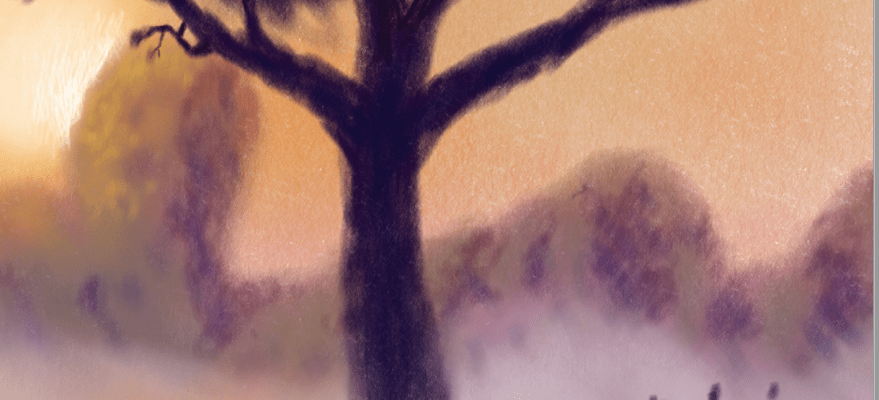
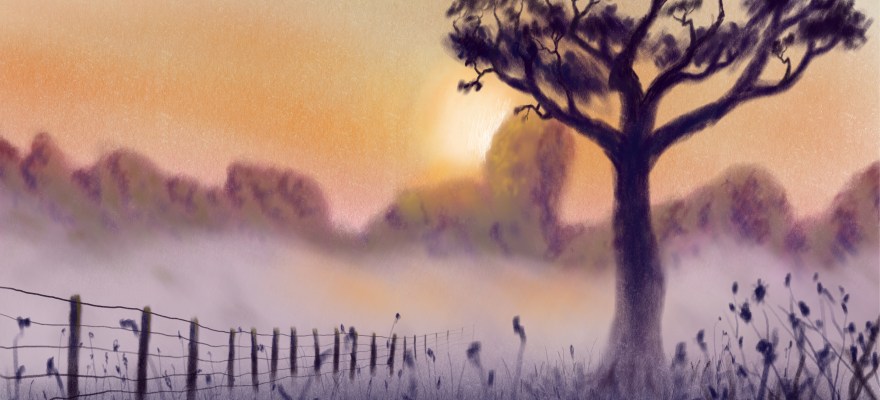
Galen Olmsted’s digital painting for the cover of The Tree You Come Home To

But further than the artwork, Sena and Jodie both made good decisions about things that needed revision or deleting. Before Jodie took my memoir, she requested I bring it down from around 275 pages to 225. That led to a fun revision process, really from my perspective the best part of revision: cutting. I have called myself the Queen of Cut, with good reason. Cutting lets you hone, helps you get rid of the indulgent. Having a goal (cut 50 pages) puts you in the shoes of a detective, in a way, as you have to find the extraneous, pay closer attention to what the words say. Then you evolve into the sculptor who chips away, smooths the edges, lets the art emerge.

Supporting small book stores and presses increases diversity, opens doors for less accomplished writers. A giant like amazon gets us with the incredible ease they offer and prices lower than anywhere else. They can sell books for less than it costs to print them, for instance, and we gobble that up. But maybe this loads our diet with sugar and fat. You can run from them but you can’t hide. So if you choose, at least some of the time, buy local! Then maybe these small book stores and presses will survive and we can hold off our dystopic future a little bit longer.

2/10 Countdown: Motherhood

If you lose someone very close, someone in your blood, adoptive, or friendship family, especially if the circumstances are violent and unexpected, you may do what I did: doubt your role, scrutinize the ways you failed in it, dream and then when you wake up, remember, wishing you hadn’t.

I hope, then, that you are flushed with gratitude for the life that gave you such a role to fulfill, however flawed, however well. That happened to me, too.

Because being Casey’s mother is an important thread in The Tree You Come Home To, I am not sure what part to give you here. But here’s what comes first to mind, a dream, which I put into one of the parts of “The Architecture of Loss,” the poem I referred to a few days ago:

III

The doors slam shut on the night-time
river of sliding images as the boy rises,

brushing leaves and debris from his shoulders.

He looks up, a grin spreads slowly across his face . . .
but something gives him pause—is it in my reach
for him or a shadow on the vaulted ceiling?—

Oh, to stop that cellular movement of knowledge across
the eyes, nose, mouth drawing down—

What am I doing in your dream?

There, there, my darling, come and let me hold you,
I’m sorry I’m sorry I’m sorry . . .

In the dream, we are in a kind of wooded ravine, maybe a cave but if so, very large and not dark. Who knows what the dream was doing before he appeared. Since he was new to the spirit world, perhaps he didn’t know his way around yet, when he stumbled into my dream. He rises and brushes himself off. He sees me, breaks into a smile. My heart fills and overflows, then he realizes that the only way he could be there, in that place, is if he is no longer living—this knowledge tracks across his face minutely, cell by cell. I watch. My heart breaks. All I can do is apologize.

This is one of two dreams where he comes to me so clearly. The other one I wrote into a poem, too, when I was putting Seeking the Other Side together. Other dreams in The Tree You Come Home To are less specifically about him and more about my doubts, guilt, all part of grief—at least for me.

When my mother died in 2001, I had feelings of gratitude that brought tears to my eyes. I thought of how she had protected me, loved me so unconditionally even when I wasn’t so lovable, believed in my abilities beyond their reach. But also for her many gifts: her love of nature, her love of music, her precise way of speaking, the depth of her thinking, the way she talked back to the television. The list is long and still growing. I thought that probably most of my good qualities came from her.

The parental urge to protect is probably in our DNA, so even when you’re not to blame, the feeling of failure runs deep. We need better ways to think about our inability to save others that doesn’t feel so rotten. I’m reminded of Stephen King’s 11.22.63, where he imagines two men who share a mission and go back in time (there’s a handy portal for that) to prevent the killing of JFK. But the past gains a kind of will and makes it more and more difficult for them to alter things, even if it really would be better if this or that murder hadn’t happened.

It was true for me and is for others, too, I imagine, that we need to work through whatever feelings of failure we have, wonder what if, but before too long, stop, before it becomes a well-rehearsed rehashing of the same old finger pointing . . . when that happens, we’ve allowed it to take on a persona, gain will, resist any kind of healing, say, “stay here, feel bad.”

I hope The Tree You Come Home To is not just a sad story. I hope it’s a healing story. I don’t want any of us to get lost in the cycle of regret.

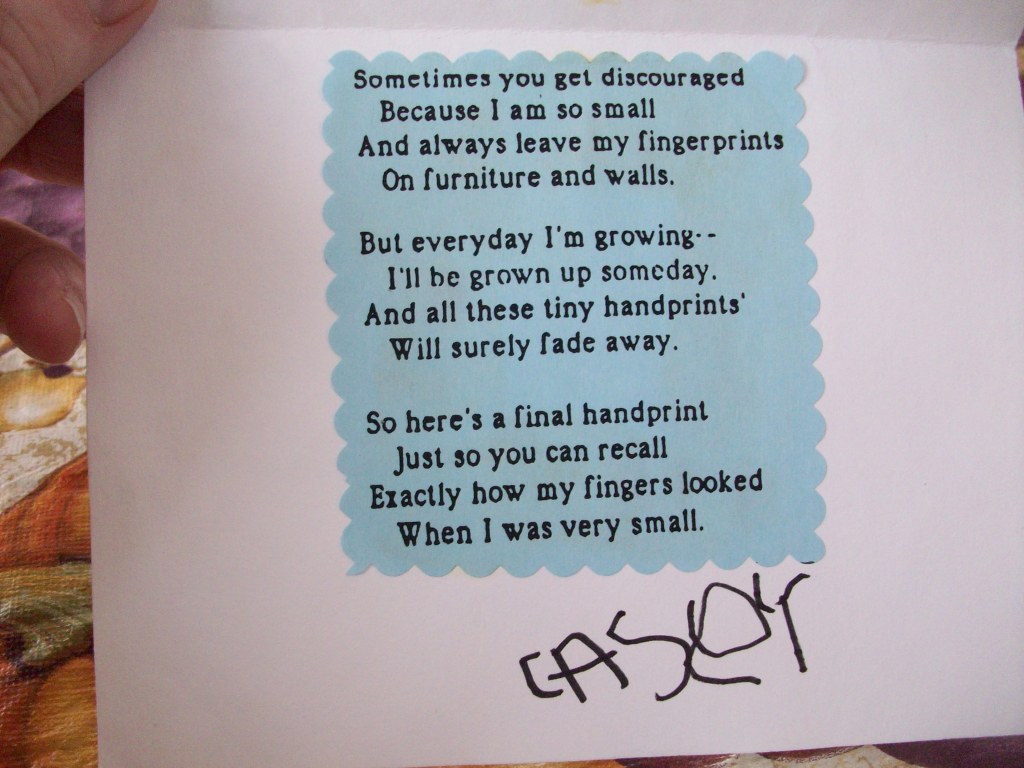
A picture of a card from 1994:

And this, from a journal entry: “My mom will be gone for a couple weeks, and I miss her.” 

3/10 Countdown. Addiction

I’ve been avoiding this one. And for that reason, I think I will make this short. It’s impossible to tell Casey’s story without talking about his struggle with drug addiction. Why would I expose him in this way, our beloved son, brother, father, friend? Because he would have wanted me to, plain and simple.

Although Casey hid his drug related activities, he also got in trouble. A lot. So there was no hiding it. For all his teen years and until the autopsy, which showed a negative toxicology, Casey did what most addicts do. They give in to it, they fight it, they struggle, weep, rage. During his younger teen years, he lied a lot, stole from us, fought us. But as he got older, he became more and more spiritual in his inner life. He valued honesty and became more open about himself.

Casey, upon graduation from Care Academy, with his counselor, Mr. Wright.

When I decided to tell Casey’s story and not just my own grief story, I gathered all the documents we had, then contacted all the facilities he’d stayed in, all the social services who’d been part of his life. Lifeskills had the most documentation—doctor reports, Casey’s worksheets, summaries, and daily staff reports from the Children’s Crisis Stabilization Unit, Rivendell Psychiatric Hospital, Park Place—but we also had police reports, and most of the materials from Care Academy in Willisburg, where he stayed twice during his 9th and 10th grades.

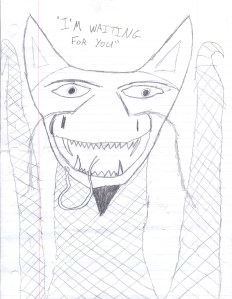
Once Casey told me that during a particularly ugly trip—I think it was during a brief time when he used crack—he saw a demon. It scared him. Later, going through his writing (he was prolific), I found this drawing, which I take to be that demon, with its ominous warning, “I’m waiting for you.”

So don’t let anyone tell you that drug addiction is a walk in the park.

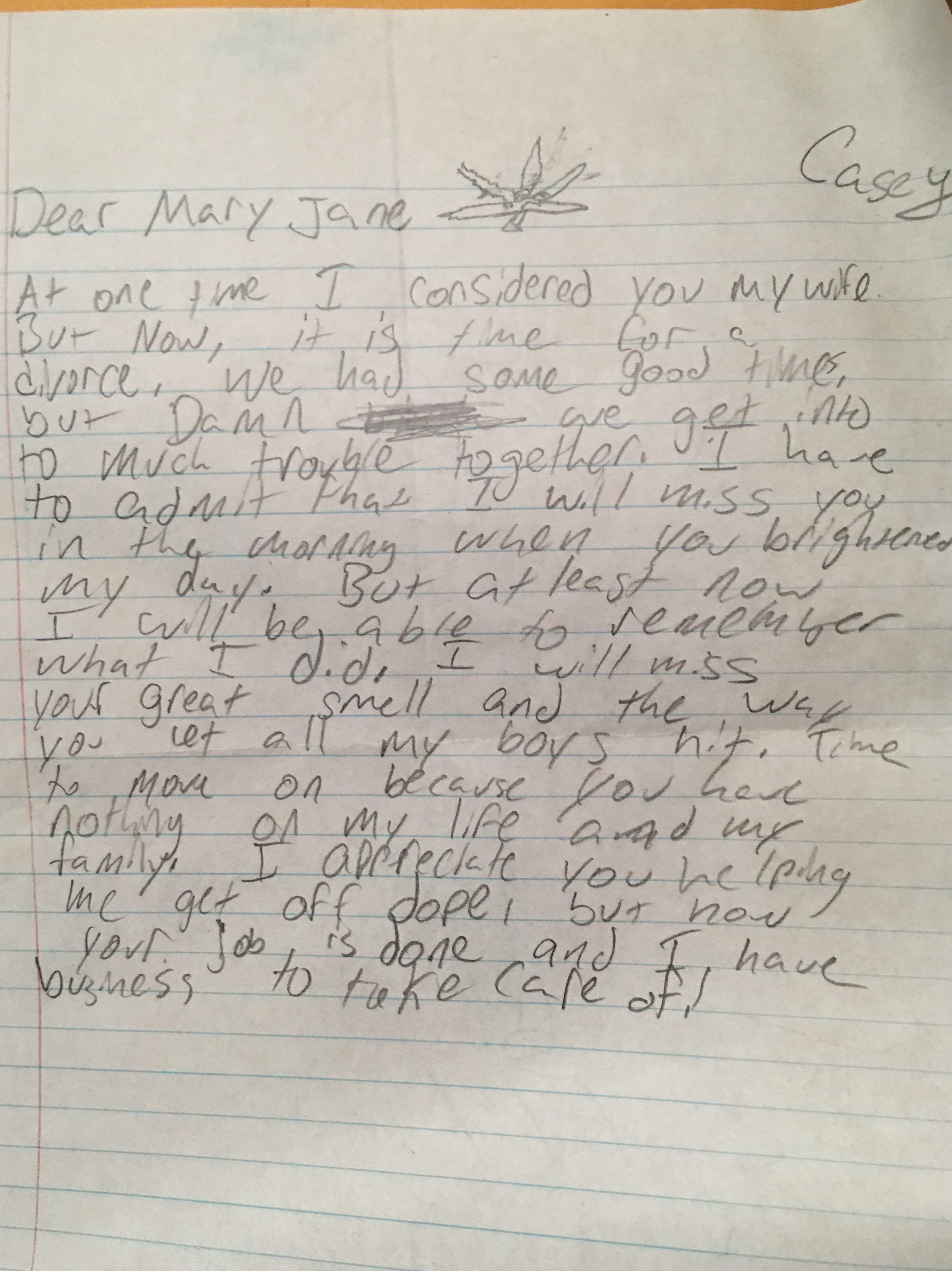
Maybe this won’t be as short as I thought it would. It seems to me that in the letter below Casey is both sincere and maybe a little ambivalent (maybe a lot).

Here’s something Casey wrote, a letter to “Mary Jane.”

That ambivalence, along with countless and often confusing contradictions, characterize a lot of his teen years. Casey would have wanted his life, including all his hard work, to mean something, not just to us who loved and love him. He would have wanted other people to confront their demons, too. After all, we all “have business to take care of!” It’s called life. (One of his favorite Bible passages was “Choose life” from Deuteronomy.)

4/10 Countdown: writing about people you know

It’s probably true that anyone writing about “life” has to consider, at some point, the possible effects of writing about people they know. (I quote “life” not because I’m being ironic or trying to say that it’s not really life, just what some people call it, but rather to suggest that it’s too big a word and too small at the same time.)

At one point in the revision process, which for The Tree You Come Home To, came in something like 1,329 waves, I decided to change everyone’s name. This way I could protect them from any uncomfortable reflection or mistake on my part. So, for instance, Adrian became “Adam,” and “Galen” became “Glen.” Did Latoya become Lavinia? However, every time I came upon “Glen,” I had a moment of cognitive dissonance. Who’s that? And what’s he doing in my manuscript? I found I didn’t care about Glen. He seemed rather like the stranger who comes to town, bent on destruction, and I didn’t understand his ways. He may have shared bits of Galen’s temperament, but not in a good way. He had a temper, for instance, but not my son’s endearing way of apologizing (or name calling, per my post a couple of days ago, on watching Court proceedings).

And what of the minor characters (minor in my story but clearly not in their own) who make an appearance? Was Molly to become Polly? It was becoming ridiculous. People would be trying to figure out who Mindy was, rather than settling on any deeper meaning the story might offer. I know my genres, and this is not a mystery. And, of course, in the end, I don’t say anything bad about anybody else. There may be a person or two who tested me beyond endurance, but they don’t get named. I understand my purpose, at least I think I do, and it’s not to be cagey or coy with the truth.

Thanks to word processing, I could change 332 instances of the wrong name for the correct name in less time than it takes me to look up from my laptop and see one of our wild birds alight on the feeder.

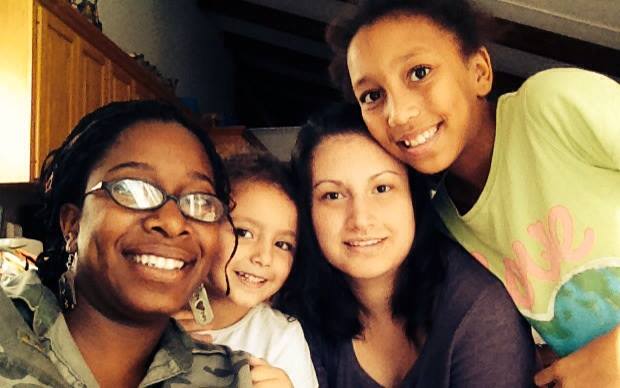
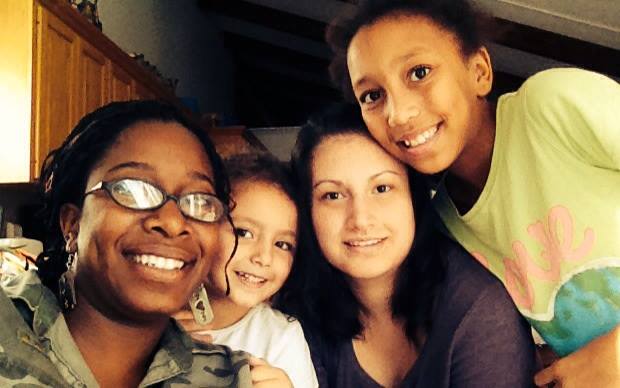
Some of the people who play a part, for which I will always be grateful. Left: Latoya, Leah, Diana, and Omni, family; Clay Smalley, who was Casey’s teacher and mentor in middle school. And below: Molly Kerby, making music during one of our SRSC symposiums.

Molly Kerby with her mandolin.

5/10 Countdown: Yoga and Meditation

The proverbial wisdom is that if you fall off the horse, you get back on. But this seems to blame the horse (you can’t let it get the better of you). My experience with getting slapped in the face, gut-punched, and shot down is that the horse has gotten hurt, too. You can’t break yourself without the thing you’ve fallen off—life—being affronted as well. Maybe it’s the butterfly effect, the ripple of a stone in the river.

But it’s true. You can’t give in, no matter how large the hole you’ve fallen into. I wrote about this in a poem called “Second Year,” which my friend Keila had told me is worse than the first year, after her son was killed at 16 in a wreck.

dreams thrust up their skinny arms
and fingers catch the light
before they sink into marshy sag.

There is no desire.
It doesn’t want to eat the rest,
it just does.

In another poem, “Architecture of Loss,” I tried to describe the way that heaviness becomes who you are. In the last section of the poem, I imagine that weight as a spot in the palm of your hand. Even when you want to share it, to get close to someone, you are unable, defined by that weight, which is just too much for the other person to handle. So you end up alone.

Matter condensed and carried just inside.
If I pull it out and show you, it will sit in the center
of my palm for a moment and then pull my hand
to the ground. You will kneel down as well, curious,
and then the earth will tremble and you will notice
that a crater has formed around us,
my palm and the thing I wanted to show you
there at the center, attached by an arm, a body.
You will scramble away, pulling yourself
branch by branch toward the crest, and wave
over your shoulder—I don’t blame you
for your swift departure.

To prevent myself from devouring myself, I went to two, maybe more, yoga classes. But, I wasn’t ready. Every time the teacher suggested I focus on my breath, I cried. I loathed the body that was moving around on the mat. I decided to try meditation instead, and went to a group meditation at our local UU church. There, the meditation leader Frank introduced us to the Buddhist teacher Sharon Salzberg. I found her easily enough on youtube, got a couple of her books, and discovered I could do this in my own room in my own house, the way I could not with a group of people, no matter how lovely, in a yoga class.

What was especially helpful was Salzberg’s book and youtube on lovingkindness. Because I was so consumed by my own thoughts and feelings, it was important to get out of myself. The meditation involves repeating May I be safe, may I be healthy, may I live with ease, may I be happy. Then you imagine a benefactor, someone who did you a kindness, and you repeat, saying, May you be safe, may you be healthy, may you live with ease, may you be happy. Then you think of someone you have less positive associations with and repeat. Eventually you work your way to someone who deeply troubles you. If that’s too difficult, you can place that person with someone else, and now the singular “you” becomes the plural “you” or even “we.” This movement outward, from self to all sentient beings, is at the heart of Buddhist lovingkindness meditation (as I understand it).

I have for about five years had an active yoga practice and am deeply appreciative of 4Yoga (and before that Harmony Yoga) for what they offer our community. I guess what I’m saying is, yoga helps you get back on the horse, and it does it in such a way that the horse herself is better, too.

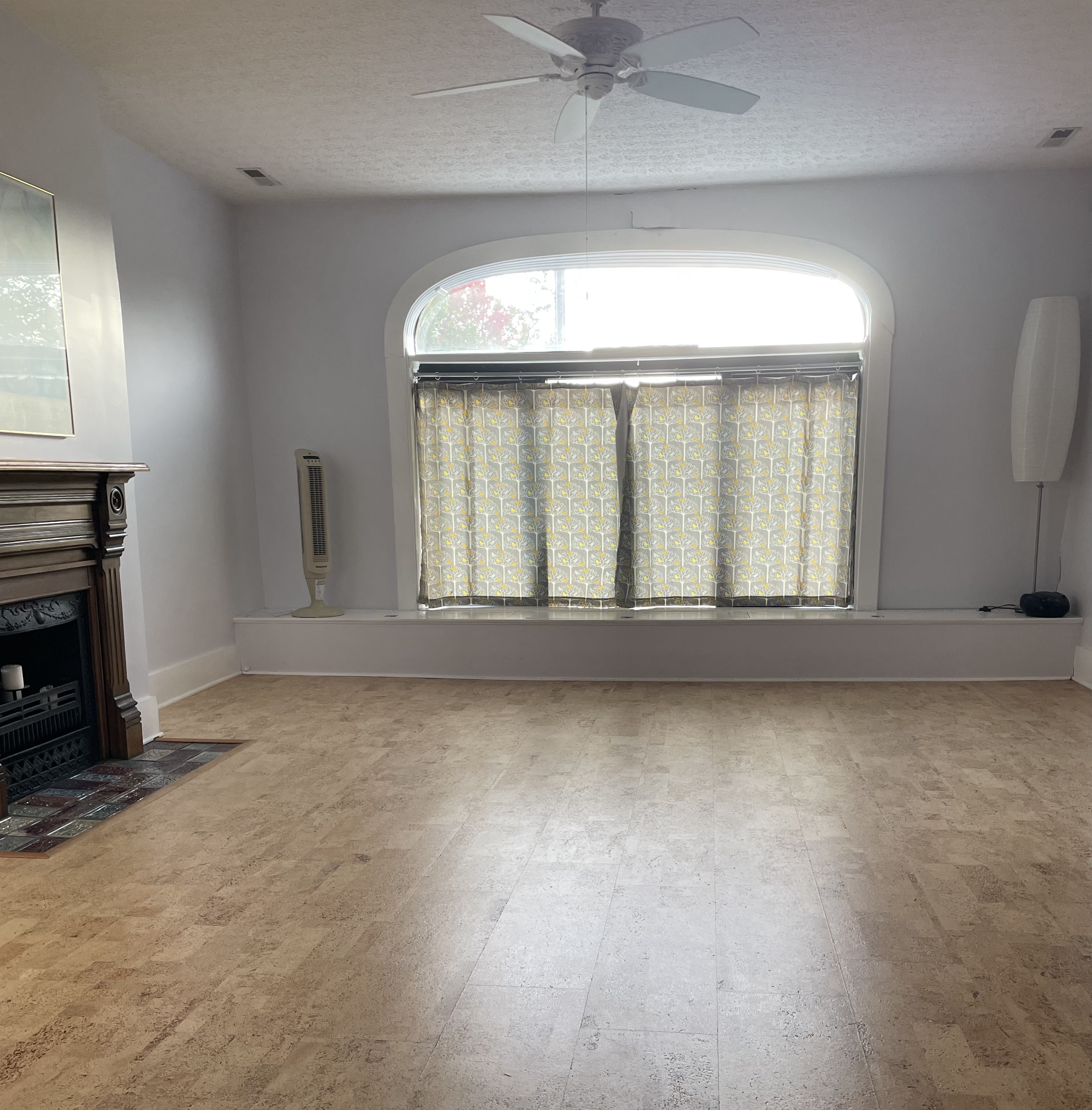
We meet upstairs where that window is, and here’s the studio, overlooking Fountain Square. Photo credit: Heather Kessler. (The square is mine.)